
Table of Contents
- What is Emotional Fitness?
- Key Pillars of Emotional Fitness
- Why Emotional Fitness Matters: Unlocking a Better Life
- Practical Strategies to Cultivate Emotional Fitness
- Emotional Fitness vs. Emotional Intelligence: A Comparison
- Overcoming Common Challenges in Building Emotional Fitness
- Integrating Emotional Fitness into Your Daily Routine
- Recognizing When to Seek Professional Support for Emotional Fitness
- Embrace Your Emotional Fitness Journey
What is Emotional Fitness?
Emotional fitness is your capacity to understand, manage, and express your emotions effectively. It is not about avoiding negative feelings. Instead, it involves building resilience and adapting to life’s inevitable ups and downs.
Just like physical fitness, emotional fitness requires ongoing practice and dedication. It empowers you to navigate challenges with greater ease. Strong emotional muscles help you bounce back stronger.
Key Pillars To Emotional Fitness
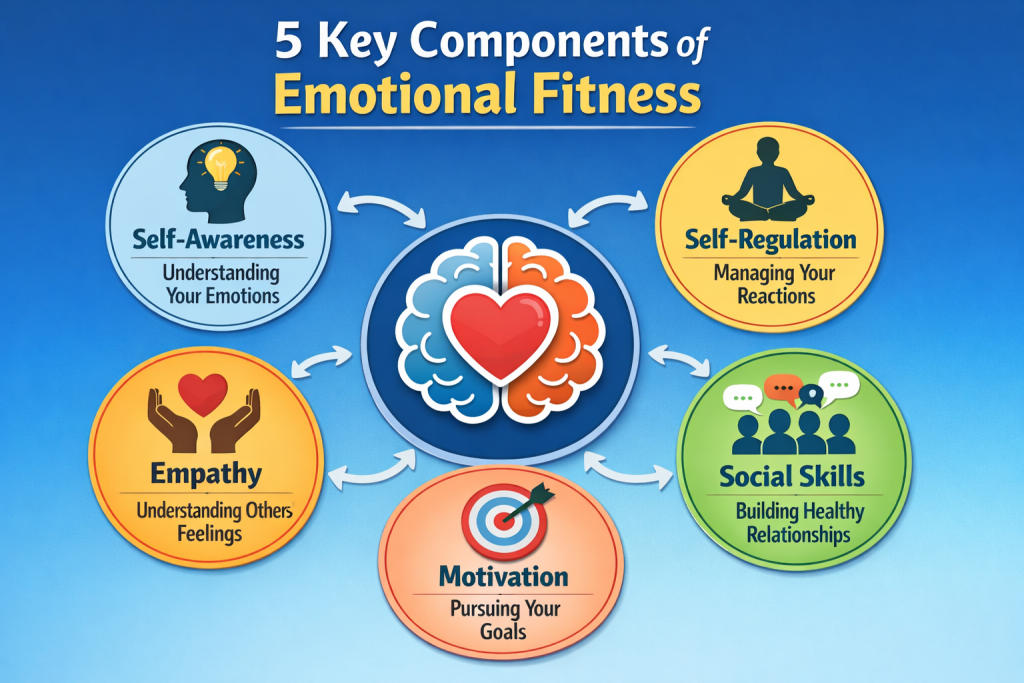
Developing robust emotional fitness relies on several interconnected components. Each pillar supports the others. Understanding them is the first step towards improvement.
These core elements form the foundation of your emotional strength. Nurturing them fosters overall well-being. Focus on strengthening each area for lasting growth.
- Self-Awareness: Recognizing your own emotions, thoughts, and values. Understanding how they influence your behavior is crucial.
- Self-Regulation: Managing your impulses and adapting to changing circumstances. This includes handling disruptive emotions effectively.
- Motivation: Using your deepest preferences to move toward goals. This helps you persist despite setbacks and frustrations.
- Empathy: Sensing others’ feelings and understanding their perspectives. This involves taking an active interest in their concerns.
- Social Skills: Handling emotions in relationships and accurately reading social cues. This builds rapport and effective communication.
Why Emotional Fitness Matters: Unlocking a Better Life
Cultivating strong emotional fitness offers a cascade of benefits across your entire life. It directly impacts your mental and physical health. It also enhances your relationships and professional success.
Imagine facing stress with calm and clarity. This is the promise of improved emotional well-being. It transforms how you experience the world around you.
The advantages extend far beyond simply feeling “good.” They create a resilient foundation. This allows you to truly thrive.
- Enhanced Resilience: You will recover more quickly from adversity. Setbacks become opportunities for growth rather than crushing blows.
- Improved Relationships: Better emotional understanding leads to stronger bonds. You can communicate more effectively and resolve conflicts constructively.
- Reduced Stress and Anxiety: Developing coping mechanisms helps manage daily pressures. This lowers your overall stress levels significantly.
- Greater Life Satisfaction: A deeper connection to your emotions fosters contentment. You experience more joy and purpose in everyday life.
- Better Decision-Making: Clarity of thought, even under pressure, leads to wiser choices. You respond thoughtfully rather than react impulsively.

Practical Strategies to Cultivate Emotional Fitness
Building your emotional fitness is an active process. It involves implementing consistent, intentional practices. Start small and build momentum over time.
These strategies are accessible and powerful tools. They help you strengthen your emotional muscles daily. Choose practices that resonate with you.
- Practice Mindfulness and Meditation: Mindfulness helps you stay present and observe your thoughts without judgment. Even five minutes a day can make a big difference. It fosters a calm, centered state of mind. Regular practice increases your self-awareness. It allows you to create space between stimulus and response. This empowers thoughtful reactions over impulsive ones.
- Journal Your Thoughts and Feelings: Writing down your emotions can provide clarity and perspective. It helps process difficult experiences. Journaling is a powerful tool for self-reflection. This practice allows you to identify patterns in your emotional responses. It also helps articulate what you are feeling. This clarity supports better emotional regulation.
- Cultivate Strong Social Connections: Humans are social beings; connection is vital for emotional health. Nurture meaningful relationships with friends and family. Seek out supportive communities.Sharing your experiences and feelings with trusted individuals reduces feelings of isolation. Strong social ties act as a buffer against stress. They provide essential emotional support.
- Prioritize Physical Well-being: Your physical and emotional health are deeply intertwined. Regular exercise, balanced nutrition, and adequate sleep are non-negotiable. They directly impact your mood and energy levels.Physical activity releases endorphins, which have mood-boosting effects. Good sleep regulates hormones that influence stress and emotion. Fueling your body supports your mind.
- Develop Healthy Coping Mechanisms: Identify constructive ways to manage stress and difficult emotions. This might include hobbies, deep breathing exercises, or spending time in nature. Avoid unhealthy coping strategies.Having a toolkit of positive coping strategies is essential. It prevents you from resorting to detrimental habits. Practice these tools regularly to build proficiency.
- Seek Constructive Feedback: Understanding how your emotions and behaviors impact others is valuable. Ask trusted friends, family, or colleagues for honest insights. Use this feedback for growth. Feedback provides an external perspective on your emotional impact. It highlights areas for improvement. Embracing it fosters humility and continuous self-development.
- Practice Self-Compassion: Treat yourself with the same kindness and understanding you would offer a friend. Recognize that everyone makes mistakes and experiences emotional struggles. Be gentle with yourself.Self-compassion reduces self-criticism and shame. It allows you to acknowledge your imperfections. This fosters a healthier relationship with your inner critic.
For further reading on building emotional resilience, you may find valuable insights from the American Psychological Association on Resilience. Another excellent resource is WHO’s work on Mental Health.
Emotional Fitness Vs. Emotional Intelligence: A Comparison
While often used interchangeably ,emotional fitness and emotional intelligence are distinct yet related concepts. Understanding their differences clarifies your development path. Both contribute significantly to overall well-being.
Emotional Intelligence is more about understanding. Emotional Fitness is about the active capacity and strength. Think of it as knowing the theory versus being able to perform the exercise.
Emotional Fitness Vs. Emotional Intelligence
| Feature | Emotional Fitness | Emotional Intelligence(EQ) |
| Definition | The capacity to adapt to stress, adversity and change. It’s about maintaining emotional stability & resilience. | Ability to understand, use, and manage one’s own emotions, and to perceive and influence the emotions of others. |
| Focus | Practical application and strength in managing emotional challenges. | Cognitive understanding of emotions. |
| Analogy | Being able to consistently perform exercises (practice/strength). | Knowing how to exercise (theory). |
| Outcome | Greater resilience, stress management, sustained well-being. | Better communication, empathy, leadership. |
| Relationship | Emotional Fitness is the active state and outcome of applying EQ and other skills. | EQ is a foundational component of Emotional Fitness. |
Overcoming Common Challenges in Building Emotional Fitness
The journey to enhanced emotional fitness is rarely linear. You will likely encounter hurdles. Recognizing and addressing these common challenges is vital for sustained progress.
Don’t be discouraged by setbacks. View them as learning opportunities. Persistence and self-compassion are your greatest allies.
- Lack of Awareness: Many struggle to identify their emotions accurately.
- *Solution: *Practice daily check-ins. Ask yourself, “What am I feeling right now?” Use an emotion wheel.
- Fear of Vulnerability: Opening up emotionally can feel risky.
- *Solution:* Start small with trusted individuals. Remember vulnerability fosters deeper connection.
- Negative Self-Talk: Harsh internal criticism can undermine efforts.
- Solution: Challenge negative thoughts. Practice positive affirmations. Cultivate self-compassion.
- Inconsistent Practice: Building new habits takes time and effort.
- *Solution:* Schedule emotional fitness activities. Treat them as important appointments.
Integrating Emotional Fitness into Your Daily Routine
Small, consistent actions yield significant results for your emotional fitness. Look for opportunities to weave these practices into your existing day. Consistency is far more impactful than intensity.
These integrations do not require large blocks of time. Many can be done in just a few minutes. Make them a natural part of your routine.
- Morning Rituals: Start your day with 5-10 minutes of mindfulness or journaling. Set a positive intention for the day ahead.
- Workday Breaks: Take short, mindful breaks. Step away from your screen. Practice deep breathing exercises.
- Evening Reflection: Before bed, reflect on your emotions. What went well? What could be improved?
- Active Listening: During conversations, fully engage. Try to understand the other person’s perspective. This builds empathy.
- Regular Movement: Integrate walks, stretching, or light exercise. Even short bursts improve mood and focus.
For deeper dives into managing stress and improving your well-being, explore our articles on effective stress management techniques.
Recognizing When to Seek Professional Support for Emotional Fitness
While self-help strategies are powerful, sometimes professional guidance is necessary. Recognizing when to seek help is a sign of strength. It demonstrates a commitment to your emotional fitness.
Mental health professionals offer specialized tools and support. They can help navigate complex emotional challenges. Do not hesitate to reach out if needed.
- Persistent Low Mood:If feelings of sadness or hopelessness linger for weeks.
- Overwhelming Stress/Anxiety: When stress feels unmanageable and impacts daily life.
- Difficulty Coping: If you’re struggling to recover from significant life events.
- Relationship Issues: When emotional patterns consistently harm your relationships.
- Changes in Behavior: Noticeable shifts in sleep, appetite, or energy levels.
Embrace Your Emotional Fitness Journey
Building emotional fitness is a continuous, rewarding journey. It is about actively cultivating resilience, self-awareness, and connection. Each step you take strengthens your inner world.
Invest in your emotional well-being today. The benefits will profoundly impact every facet of your life. Start embracing a more robust, fulfilling existence.
Take that first step toward a more emotionally resilient you. Your future self will thank you for it.