
Table of Contents
Human Thoughts in a Digital World: a phrase that encapsulates one of the most pressing challenges and profound opportunities of our time. We live in an era where screens mediate much of our existence. Information cascades constantly, demanding our attention. This relentless digital immersion profoundly shapes how we think, feel, and connect.
Understanding this impact is no longer optional. It is crucial for maintaining our well-being and productivity. This article will explore the intricate relationship between our minds and the digital landscape. We will identify key challenges and, more importantly, equip you with actionable strategies. These methods will help you thrive, not just survive, in this connected age.
Human Thoughts in a Digital World: Navigating the New Landscape
The digital age has ushered in an unprecedented era of connectivity. Every moment offers new updates, alerts, and distractions. Our brains, however, evolved in a very different environment. They struggle to keep pace with this constant demand. This often leads to significant cognitive shifts and new psychological pressures.
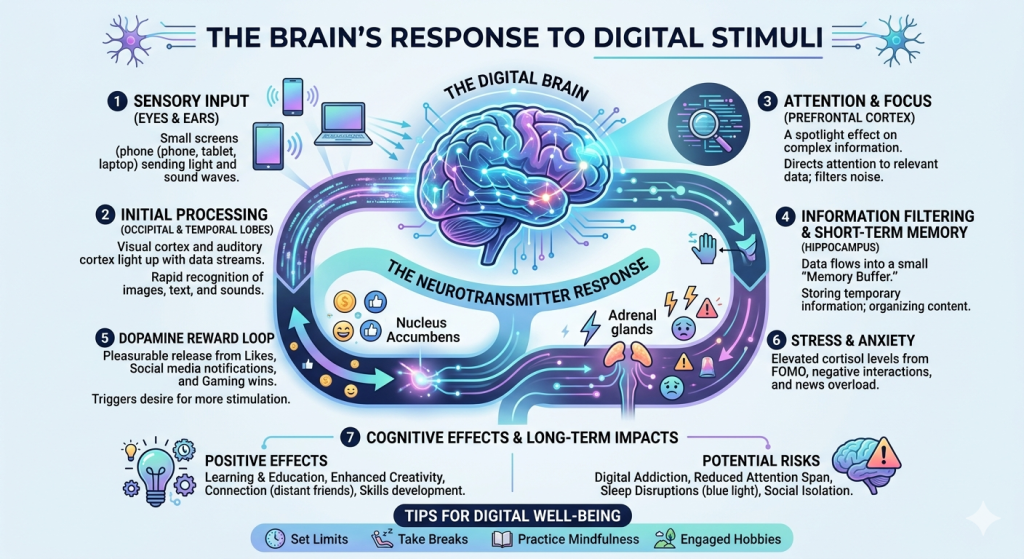
We now have instant access to vast amounts of knowledge. This is undeniably powerful. Yet, this ease of access comes with hidden costs. Our ability to focus deeply can diminish. Our capacity for sustained attention often wanes.
The Cognitive Overload Conundrum in Human Thoughts in a Digital World
Information overload is a defining characteristic of our digital lives. Every click, scroll, and notification adds to a deluge of data. Our working memory has a finite capacity. It quickly becomes overwhelmed by this constant input. This often results in a phenomenon known as decision fatigue.
When constantly bombarded, our brains struggle to filter. We find it harder to prioritize important tasks. This leads to reduced creativity and problem-solving abilities. The paradox of choice in the digital realm can paralyze us. We become stuck, unable to commit to one path.
Symptoms of Digital Cognitive Overload:
1.Reduced attention span and difficulty concentrating.
2.Increased stress levels and anxiety.
3.Lowered decision-making quality.
4.Feelings of mental exhaustion.
5.Difficulty remembering details.
This constant state of partial attention wears us down. It impedes our ability to engage deeply with any single subject. This directly impacts the quality of our human thoughts.
Emotional Resonance in a Screen-Centric Era
Digital platforms have reshaped our social interactions. We connect with others globally. However, these connections often lack depth. Social media fosters a culture of comparison. This fuels feelings of inadequacy and FOMO (Fear Of Missing Out).
Empathy can also be challenged online. The absence of face-to-face cues reduces our ability to read emotions. This sometimes leads to more aggressive or less considerate communication. Our emotional landscape becomes complex. Navigating this requires new skills and awareness.
Optimizing Human Thoughts in a Digital World: Essential Strategies
The good news is that we are not passive recipients of digital influence. We can reclaim control over our attention and mental well-being. Proactive strategies allow us to harness technology positively. We can protect our inner peace and cognitive function.

These seven essential strategies provide a roadmap. They help us navigate the complexities of digital life. They enable us to maintain clarity and focus.
1.Digital Mindfulness & Intentional Use
Digital mindfulness involves being present and aware during online activities. It means engaging with purpose, not just passively consuming. Set clear intentions before opening apps or browsing the internet. Ask yourself: “Why am I here?” and “What do I hope to achieve?”
Establishing clear boundaries is also vital. Designate tech-free zones or times. This helps to create mental space away from constant stimulation. Be intentional about your digital consumption.
Tips for Mindful Digital Consumption:
.Turn off non-essential notifications.
.Schedule specific times for checking email and social media.
.Practice single-tasking online.
.Engage only with content that adds value.
2.Cultivating Deep Work and Focus
Deep work is the ability to focus without distraction on a cognitively demanding task. This skill is increasingly rare, yet highly valuable. Techniques like the Pomodoro Technique can aid concentration. Work in focused bursts, followed by short breaks.
Minimize all potential distractions during these periods. Put your phone away. Close unnecessary browser tabs. Create an environment conducive to deep concentration. This fosters richer human thoughts and higher-quality output.
3.Information Curation & Critical Thinking
In a world of abundant information, curation is key. Learn to filter out noise and irrelevant data. Follow trusted sources. Actively seek diverse perspectives to avoid echo chambers. Develop strong critical thinking skills.
Always question the information you encounter online. Verify facts and consider the source’s credibility. This conscious effort helps protect your mental space. It ensures that your human thoughts are based on accurate understanding. This is crucial for navigating complex topics. Pew Research Center offers valuable insights into digital trends and misinformation.
4.Nurturing Authentic Connection
While digital tools connect us, they should not replace genuine human interaction. Prioritize real-world meetups with friends and family. Engage in face-to-face conversations. These interactions build deeper empathy and understanding. They are vital for emotional well-being.
Use digital tools to enhance existing relationships. Plan events, share meaningful moments, or stay in touch with distant loved ones. Avoid falling into the trap of superficial online exchanges. Focus on quality over quantity in your connections.
5.Embracing Digital Downtime & Rest
Regularly unplugging from digital devices is essential. It allows your brain to rest and recharge. Digital downtime promotes creativity, reflection, and problem-solving. It gives your mind space to process information organically.
Schedule daily or weekly periods where you completely disconnect. Engage in hobbies, spend time in nature, or simply relax. This conscious separation is crucial. It helps prevent burnout and strengthens your mental resilience.
6.Digital Empathy & Ethical Online Behavior
Our online actions have real-world consequences. Practice empathy in all your digital interactions. Remember there is a human behind every screen. Think before you post, comment, or share content. Consider how your words might impact others.
Promoting positive digital citizenship fosters a healthier online environment. Report abuse and stand up against cyberbullying. Be a force for good in the digital sphere. This contributes to a more constructive shared space for human thoughts.[Mindful Movement: 10 Minutes of Stretching Rewires Your Brain for Focus – 5 Powerful Shifts]
7.Leveraging Technology for Personal Growth
Technology is a powerful tool when used intentionally. It can significantly aid personal development. Explore apps for meditation, learning new skills, or tracking personal goals. Use technology to enhance your productivity and well-being.
Identify specific ways technology can serve your personal growth journey. Do not let it simply consume your time. Be the master of your tools, not their servant. Platforms like the World Economic Forum highlight how technology can drive positive change.
Digital World Impact on Human Thought
To further illustrate the shifting landscape, consider this comparison. The digital world has reshaped many aspects of our cognitive and social lives. It presents both benefits and distinct challenges. Understanding these differences is crucial.
| Aspect of Thought | Traditional Thought Process | Digital-Influenced Thought Process |
| Attention Span | Sustained, deep focus common. | Fragmented, multi-tasking, short bursts. |
| Information Recall | Emphasis on memorization and deep encoding. | Reliance on external digital memory (search engines). |
| Emotional Depth | Rich, nuanced face-to-face cues. | Can be superficial, prone to misinterpretation (text). |
| Social Connection | Strong, localized, physical bonds. | Wide but often shallow, global networks. |
| Decision Making | Deliberate, reflective, slower pace. | Faster, often impulsive, influenced by algorithms. |
This table highlights the divergence. It shows how profoundly human thoughts are evolving. We must consciously bridge these gaps. We need to retain the strengths of traditional thought while adapting to digital realities.
Conclusion
The journey of navigating Human Thoughts in a Digital World is ongoing. It requires constant awareness and deliberate effort. The digital realm offers incredible potential for connection, learning, and growth. However, it also presents unique challenges to our mental clarity and well-being.
By implementing these seven essential strategies, you can take control. You can cultivate a more mindful and balanced relationship with technology. Empower yourself to protect your focus, nurture authentic connections, and embrace digital downtime. Your human thoughts are your most valuable asset. Safeguard them effectively in this fast-paced digital age. Take control of your digital destiny now!